
AI on both sides of recruitment, changing hiring practices and why the human touch may become more valuable.
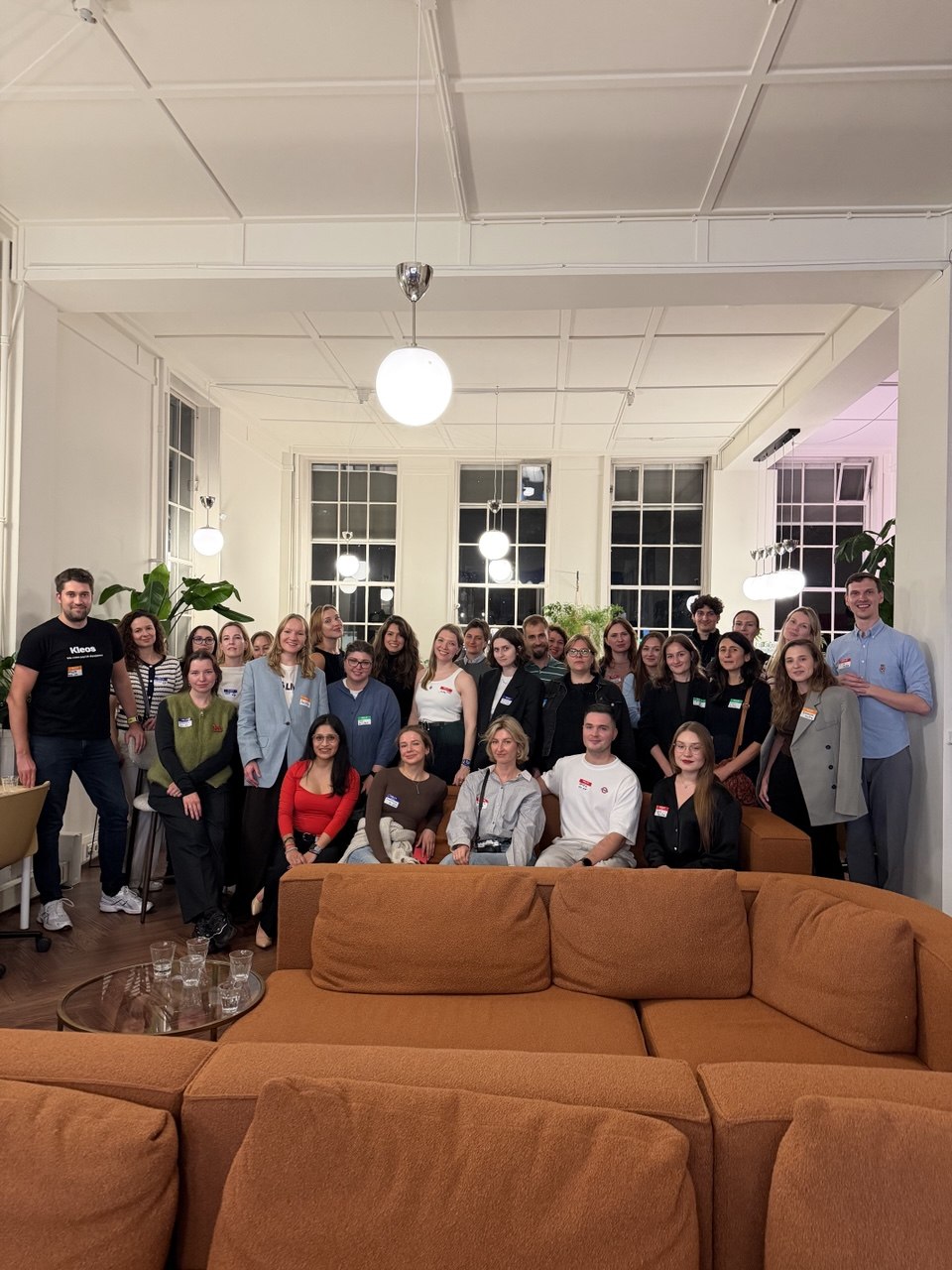
Last week, we brought together HR and Talent professionals in Amsterdam for our International HR Club meetup to discuss what actually changed in global hiring in 2026 and what we should expect in 2027.
Our guest speaker was Liubov Pchelinova, Senior People Programs Manager at Nebius and former Head of Talent Acquisition.
We covered quite a few topics, from AI adoption and candidate fraud to changing expectations for senior professionals and the future of recruitment.
But one idea particularly stayed with me:
The more we automate recruitment, the more valuable genuine human interaction may become.
Here are four reflections I took away from our conversation.
1. AI is now on both sides of recruitment
For years, we've discussed how recruiters and employers could use AI to improve sourcing, screening, outreach and scheduling.
But candidates are adopting AI just as actively.
CV writing, applications, interview preparation and even real-time assistance during interviews are becoming increasingly accessible.
According to the research presented during the session:
- 86% of surveyed Swiss jobseekers use AI in their job search.
- 69% of surveyed US organisations use AI somewhere in Talent Acquisition, although only 18% use it broadly.
These are different markets and surveys, but the direction is clear: AI is increasingly present on both sides of hiring.
And that creates an interesting challenge.
Generating information is becoming easier. Verifying whether that information reflects genuine skills and experience is becoming harder.
2. Are we going back to old-school interviewing?
This is where things get particularly interesting for me.
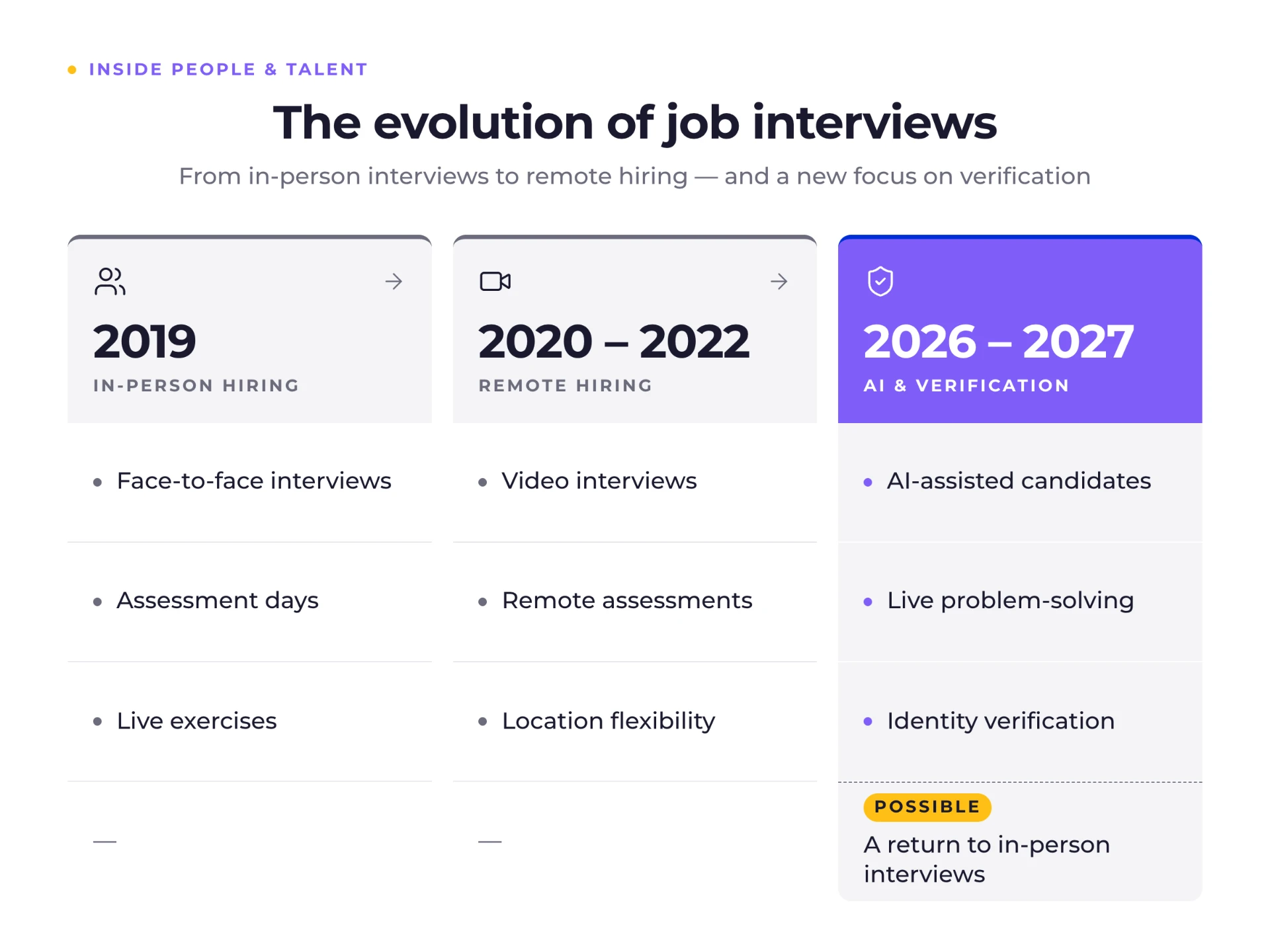
When I started working in recruitment back in 2019, many interviews were still happening in person.
Assessment days, live exercises and take-home assignments were all common parts of the selection process.
Then COVID happened.
Almost overnight, recruitment moved online.
And I remember thinking how convenient it was. Suddenly, I could interview candidates from almost anywhere, without organising meeting rooms, coordinating office visits or spending time travelling.
It felt like a huge improvement.
But now, six years later, it seems like the pendulum might be swinging back.
With AI-generated answers, real-time interview assistance and increasingly sophisticated candidate fraud, employers face a new challenge: how do you actually verify someone's competencies?
During the session, Liubov shared research covering more than 19,000 AI interviews, where 38.5% triggered potential cheating indicators, rising to 48% in software engineering.
These are indicators of possible cheating, not confirmed cases of fraud, but they highlight why assessment methods are being reconsidered.
We're seeing growing interest in:
- Live problem-solving instead of predictable assignments.
- Deeper follow-up questions and changing constraints.
- Identity verification.
- And, in some situations, returning to in-person interviews.
I find this almost ironic.
We spent years making recruitment more digital and accessible. Now AI might be pushing parts of the process back towards traditional, face-to-face interaction.
Not necessarily for every candidate or every role, but particularly where verifying technical expertise and identity is critical.
Perhaps the future of recruitment won't be entirely digital after all.
3. More candidates doesn't necessarily mean easier hiring
Another point from Liubov's presentation was the difference between candidate availability and the availability of the right capabilities.
Even in a relatively weak hiring market, companies continue to compete for experienced professionals with strong domain expertise, judgement and leadership skills.
This is especially relevant in engineering.
AI can generate code, accelerate certain tasks and suggest solutions.
But experienced engineers still need to make architectural decisions, evaluate trade-offs, identify risks and take responsibility for the final result.
AI may make execution easier, but it doesn't automatically replace experience or judgement.
And that changes what we should be looking for when assessing senior candidates.
4. AI adoption isn't the same as productivity
We've all seen impressive AI demos.
But implementing AI in real business processes is a different challenge.
As Liubov highlighted, organisations need to consider integration, security, governance, infrastructure costs and human oversight.
One study discussed during the session even found that experienced developers working with the tested AI tools were 19% slower.
It doesn't mean AI is ineffective. It means productivity improvements need to be measured rather than assumed.
I think this is particularly relevant for HR and Talent teams, where new tools appear almost every week.
The question shouldn't be "How much AI are we using?" but "What has actually improved?"
Final thought: The human touch matters
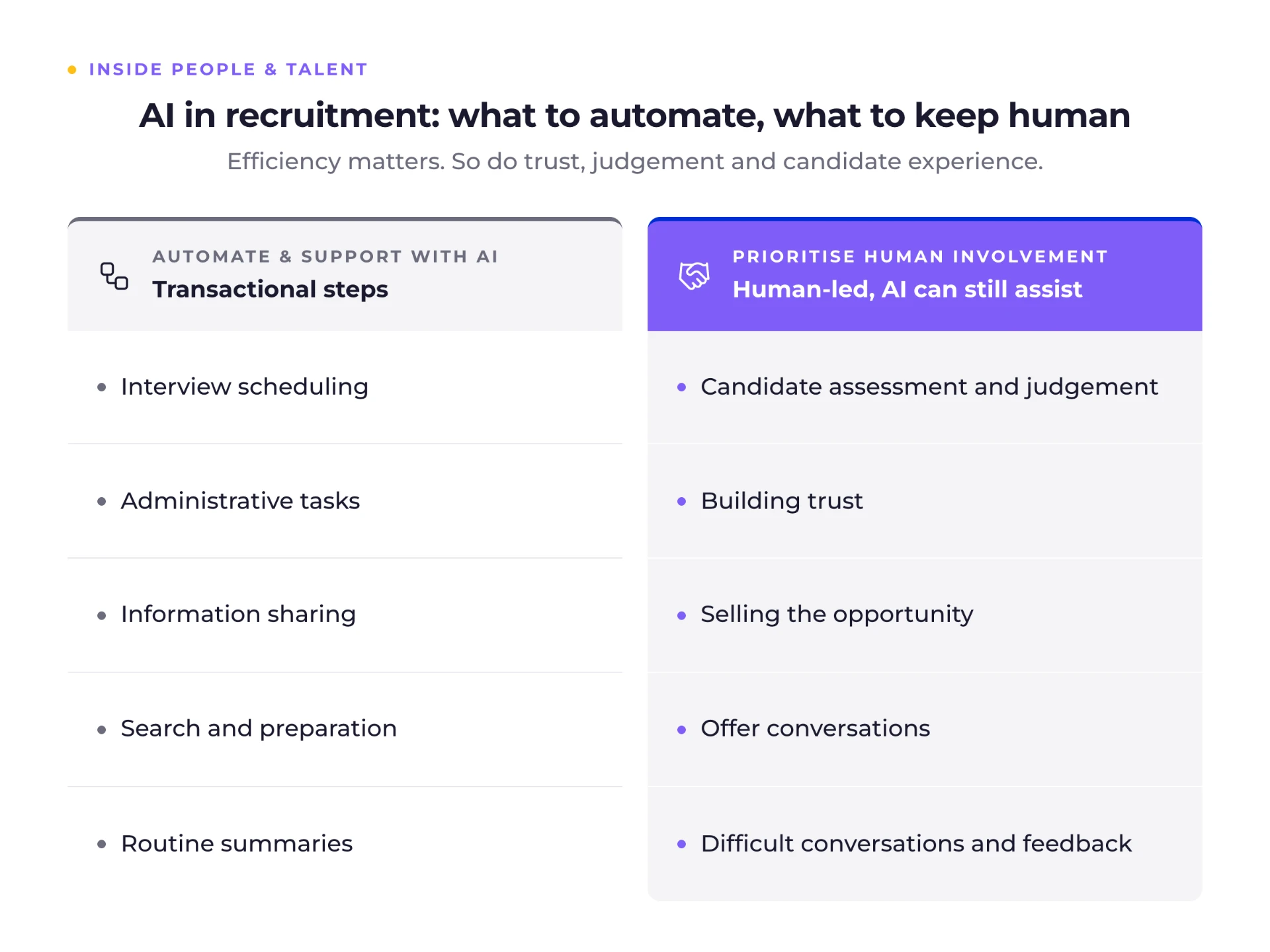
If there's one thing I took away from our Amsterdam discussion, it's that we need to be more intentional about where we use automation and where we preserve human interaction.
Scheduling, administration and routine communication can often be automated.
But interviews, assessment, offers, difficult conversations and relationship building are different.
These are moments where trust, empathy and human judgement matter.
And perhaps that's the biggest paradox of recruitment in 2027:
The more AI becomes part of hiring, the more valuable genuine human interaction may become.
A huge thank you to Liubov Pchelinova for sharing these insights and to everyone who joined us in Amsterdam.
What do you think: are we heading towards more in-person interviews again, or will AI simply change how we assess candidates online?